
A week you can see
An ordinary calendar tells you what day it is in words and numbers. Moi Calendar gives every day of the week its own colour, so Tuesday looks like Tuesday before anyone has read a thing.
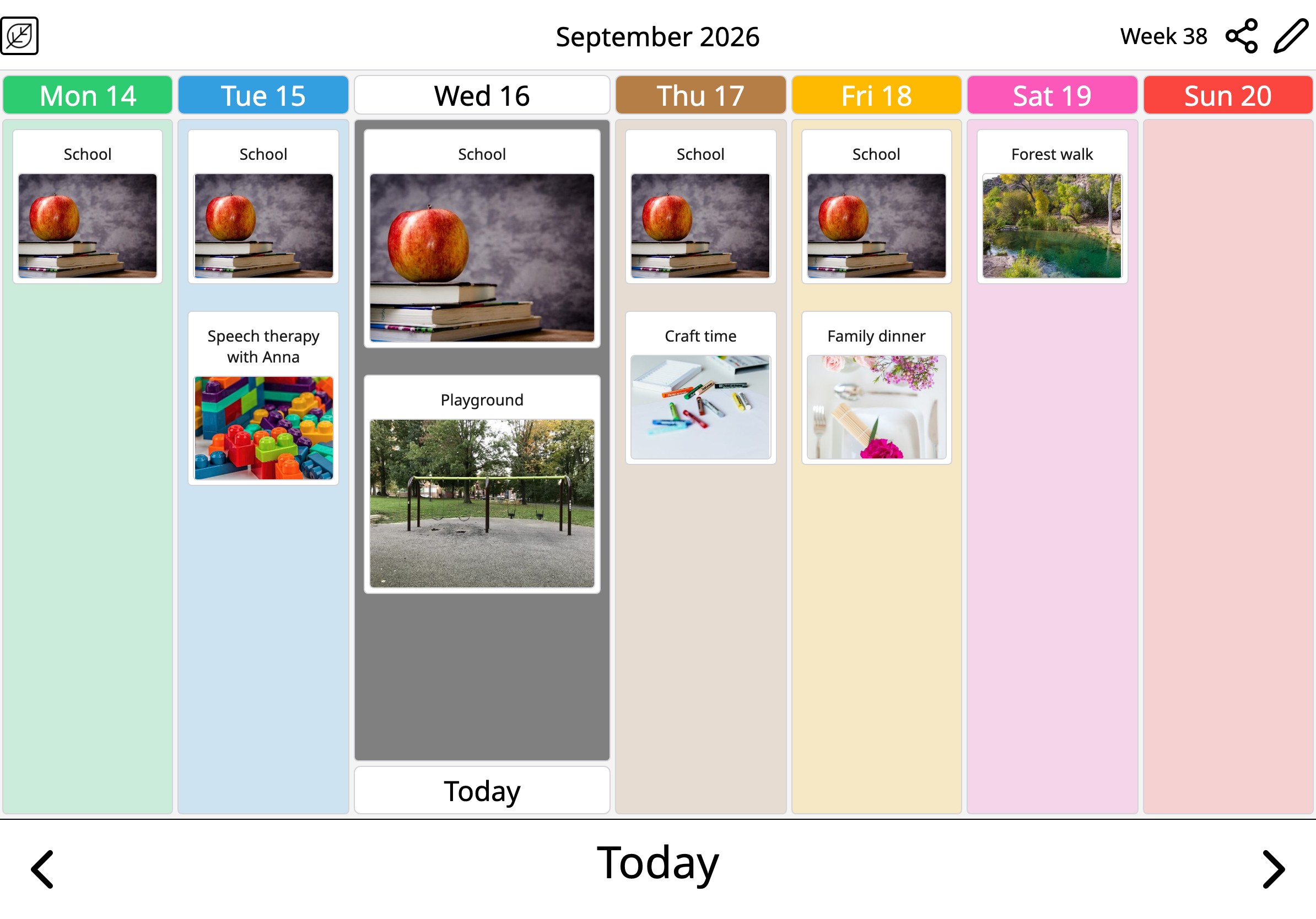
A colour is a day you can recognise
Long before a child can read the word Thursday, they can know the brown day. In Nordic special schools and daycares the days have carried colours since the 1980s, and the same colours follow a child from the kitchen wall to the classroom to the therapist's room. Moi Calendar starts with that set. Nothing to read, nothing to decode: the day is the colour.
The whole day wears it
Open a day and the colour is everywhere the eye lands: the header, the buttons, the clock, the strip along the bottom. The cards themselves stay plain, so the photo on each one is what you look at. In dark mode the colour becomes the writing on black, for evenings and for eyes that prefer it.
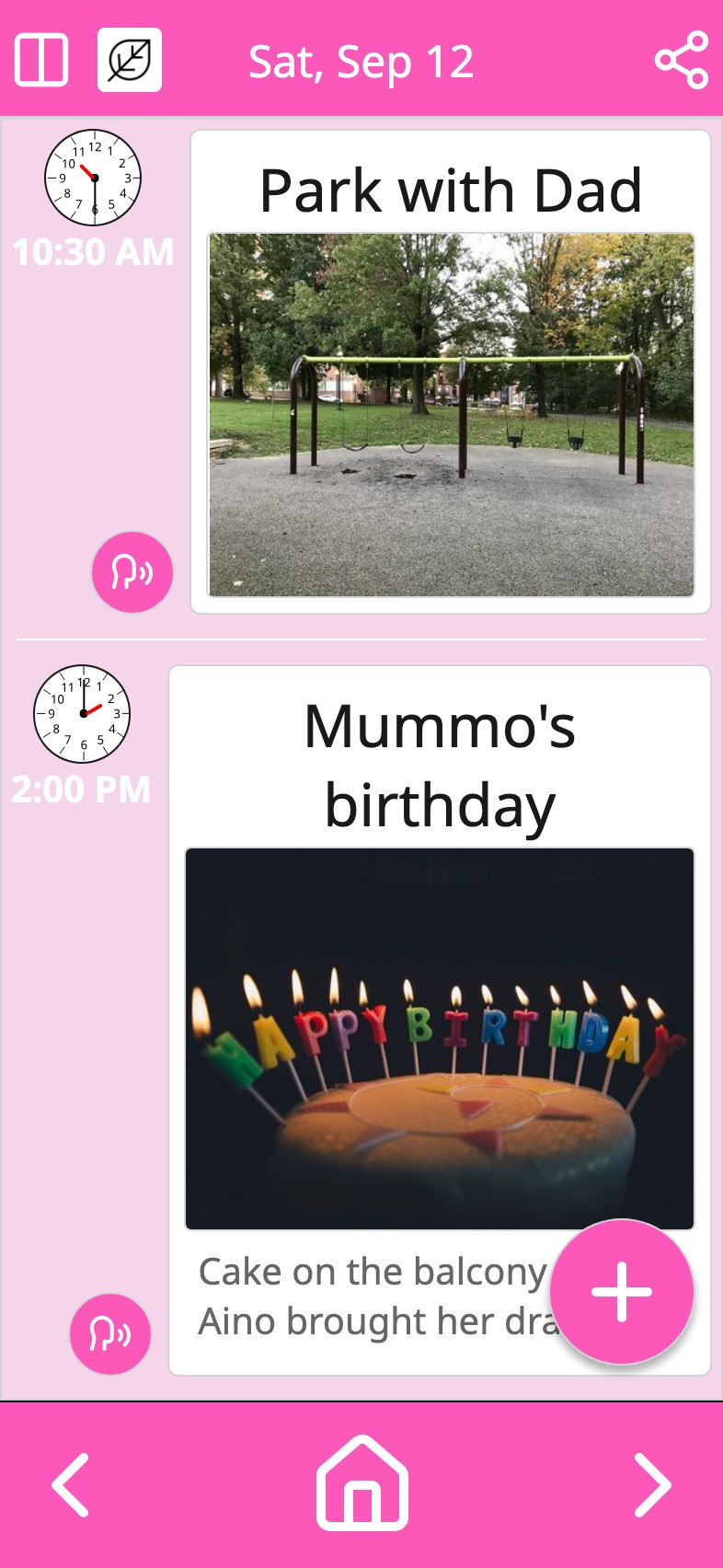
Change them to the ones your school uses
Different countries and regions have settled on different colours, and a school or a therapist may already use a set the child knows. In Settings, pick the set: Default colours, German school colours or No colours — or pick your own, a colour for each day. The whole calendar changes with it. If a colour is wrong for someone's eyes, it can simply be another colour.
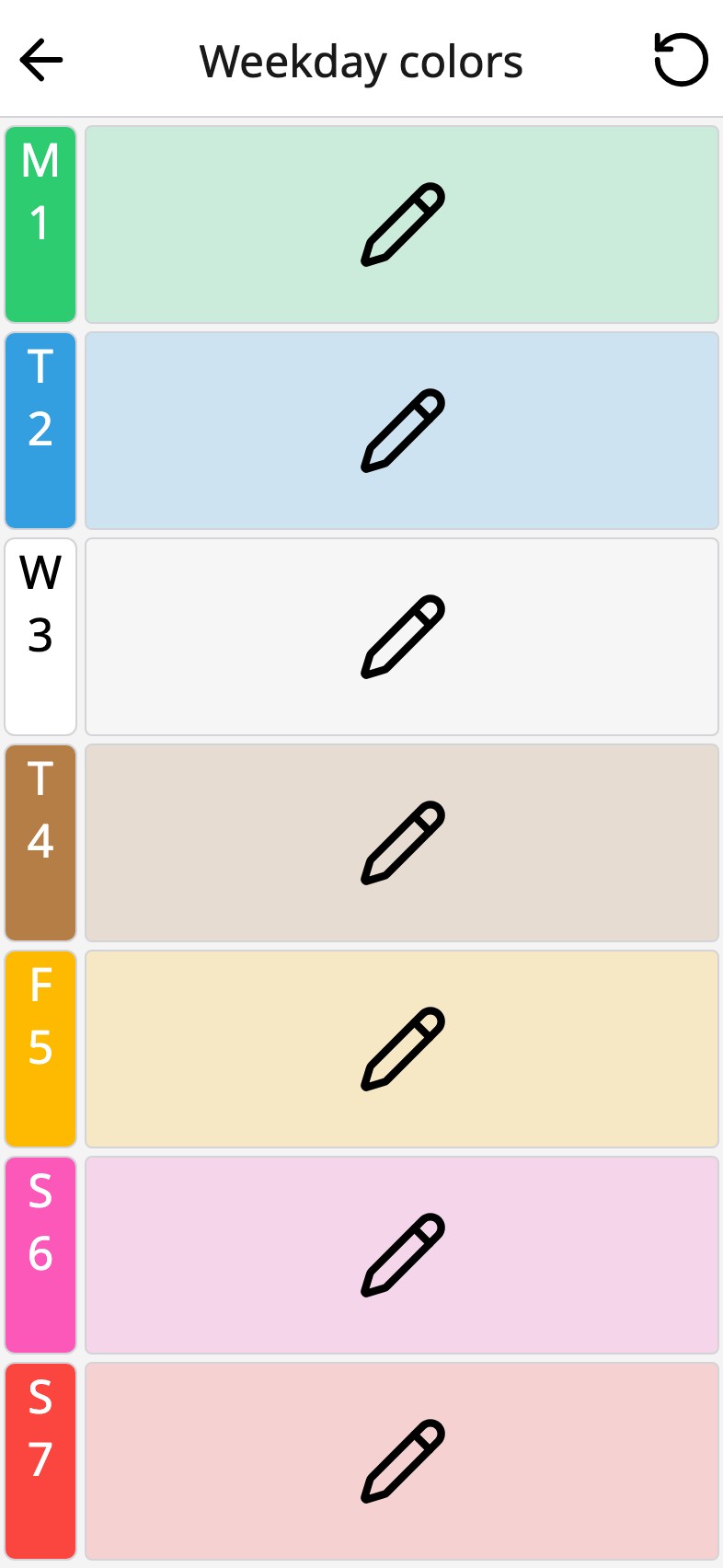
Another country, another set
German schools colour the days differently, and a child there will have been taught their set. The same week in those colours is the same week — which is the point: pick the set the person already knows, and every calendar they meet agrees.
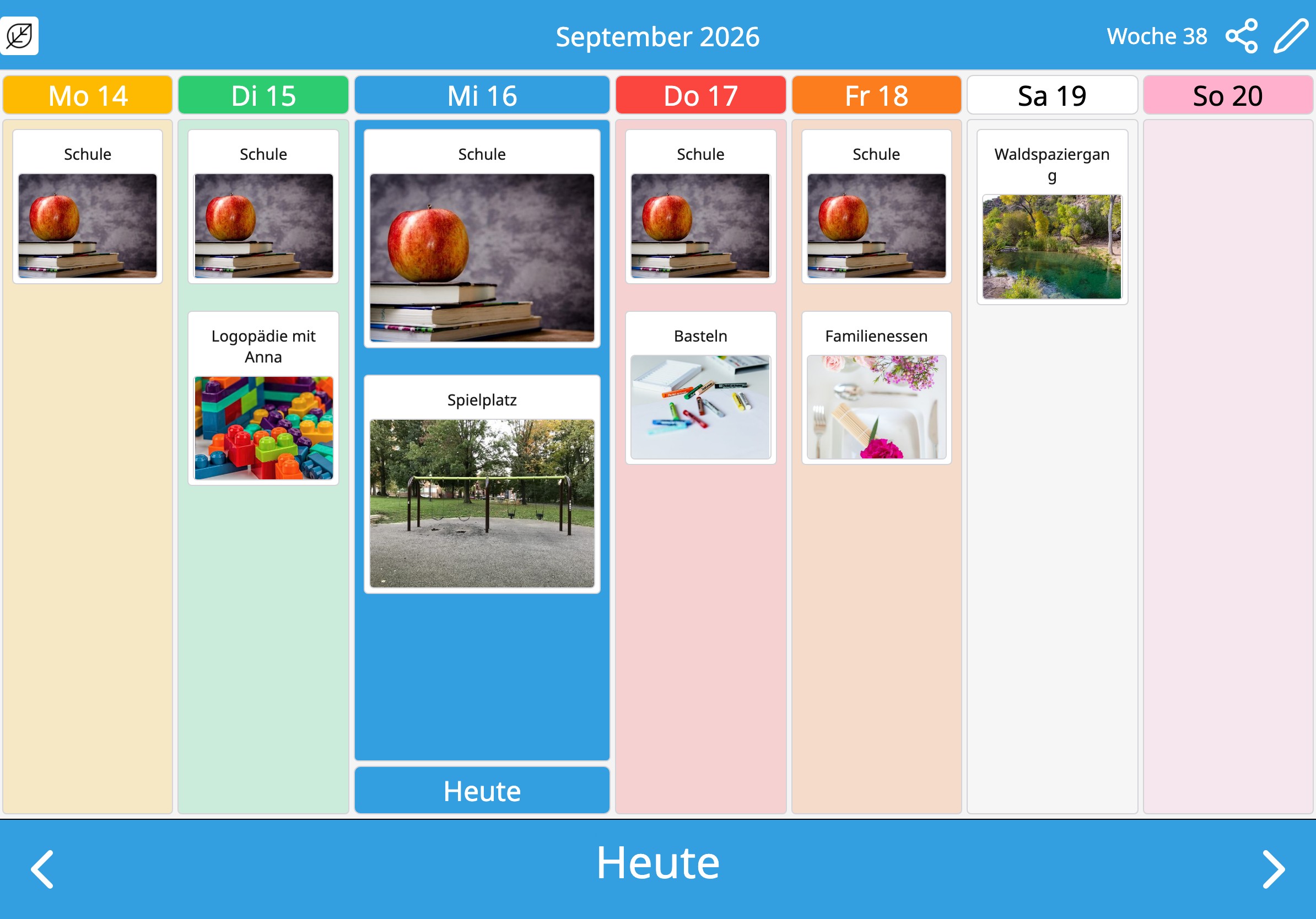
The colours are older than the app. Nordic special schools and daycares have coloured the days since the 1980s, so that a person who cannot yet read still knows where in the week they are, and so that the calendar at home matches the one at school.
Frequently asked
Are these the colours my child's school uses?
Maybe. Moi Calendar starts with the colours common in Nordic special education: green Monday, blue Tuesday, white Wednesday, brown Thursday, yellow Friday, pink Saturday, red Sunday. Germany, Austria and other places use other sets. The German school colours are a choice in Settings, and whatever else your school uses, you can set the same colours in a minute; then the calendar at home matches the one at school.
Why colours, and not just the name of the day?
Because a colour needs no reading. A picture, a colour and the word together give a person three ways to know what day it is, and the colour is the one that works from across the room. That is how practitioners describe it: the same colour on every calendar the person meets, so the week has a shape you can recognise.
Where do the colours come from?
From the visual-schedule practice in Nordic special education, where the days have had colours since the 1980s. Nobody owns them, and no study has tested the colours on their own. What is well documented is the practice they belong to: visual schedules, an evidence-based practice for autistic children and young people. Moi Calendar is built on that practice. It is not a clinical tool.
Your week, in pictures